
Radial Shockwave Therapy (ESWT) | Bakker Natural Medicine
Advanced Pain & Injury Treatments

Radial Shockwave Therapy (ESWT)

Radial shockwave therapy, sometimes referred to as ESWT, is a non-invasive treatment used to address chronically irritated soft tissues, stubborn tendon pain, and selected musculoskeletal conditions that have not fully responded to rest, exercise, or more standard conservative care. It uses mechanical pressure waves delivered to the affected area in a focused way, with the goal of stimulating change in tissue that has become persistently painful, slow to recover, or difficult to load comfortably.

  • Non-invasive treatment: No injection is required, making it a useful option for selected patients who want a procedure-based treatment without needles.
  • Chronic tissue focus: Often considered for tendon, fascial, and soft tissue problems that have become stubborn or slow to improve.
  • Pairs well with rehab: Usually works best when combined with exercise progression, load management, and a broader recovery plan.
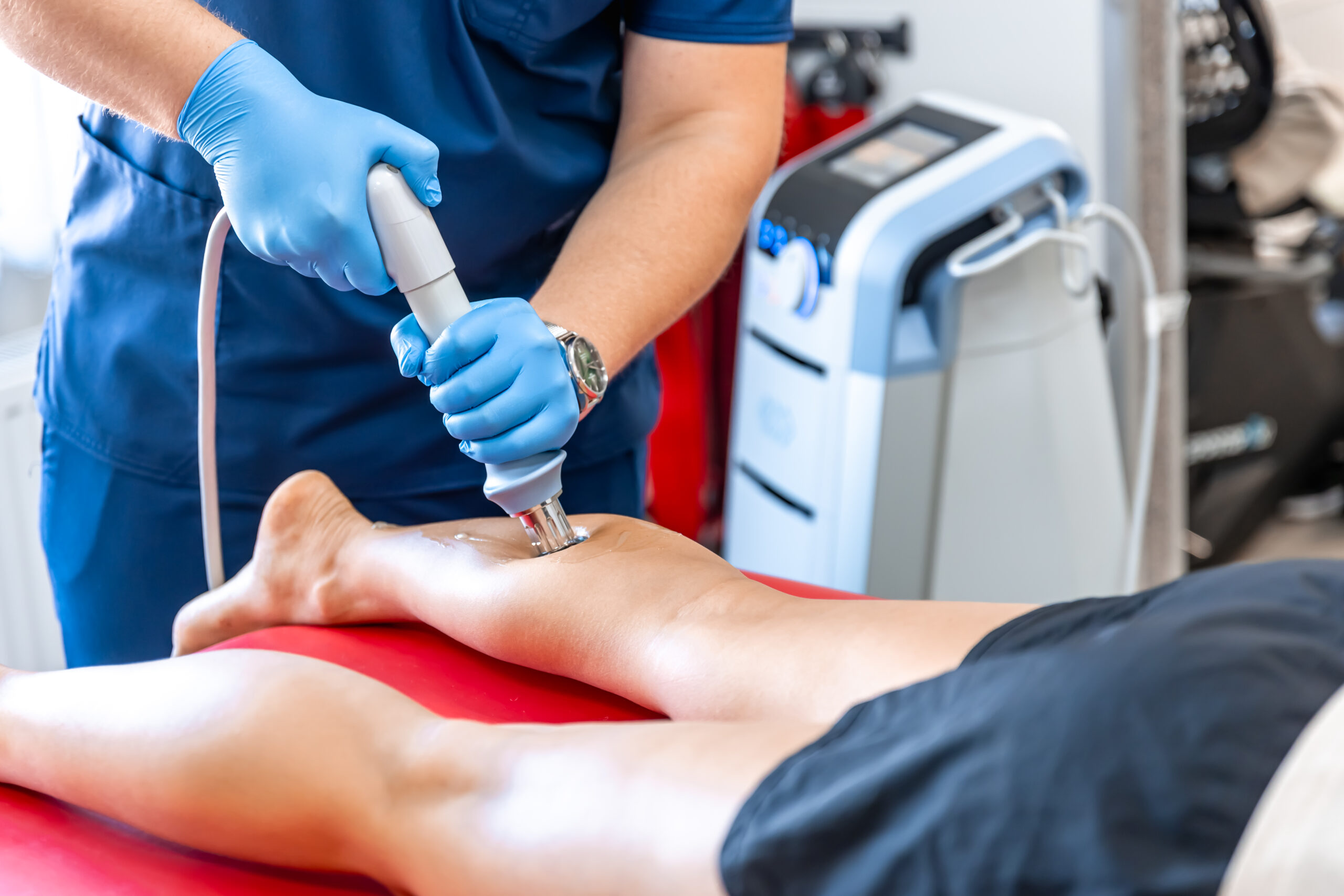
Image by Freepik

What is radial shockwave therapy?

Radial shockwave therapy is a treatment that delivers a series of mechanical pressure waves into painful or dysfunctional tissue. It is commonly used when an area has become chronically irritated, less tolerant of load, or slow to recover over time. These cases often involve tendons, fascia, or other soft tissues that are no longer behaving like an acute injury, but instead have settled into a more persistent pain pattern.

In practice, shockwave therapy is often considered for patients dealing with lingering tendon pain, plantar fascia pain, chronic tight or irritated muscle tissue, or other overuse-related conditions. It is not a stand-alone answer for every pain problem, but it can be a useful option when the pattern appears to be coming from a chronic tissue issue rather than from a purely inflammatory flare, fracture, or major structural tear.

How radial shockwave therapy works

When a tendon or other soft tissue has been irritated for a long time, the problem often becomes more complex than simple inflammation. The tissue may be less tolerant of load, more sensitive, mechanically disorganized, or slow to return to normal function. Radial shockwave therapy is used to introduce a controlled mechanical stimulus into the tissue, with the aim of helping shift that chronic pattern and support a better healing and remodeling response.

Delivers a focused mechanical stimulus

Treatment is applied directly to the painful tissue or attachment point to mechanically stimulate an area that may have become chronically irritated or slow to recover.

Supports tissue remodeling

The goal is often to help encourage change in dysfunctional tissue rather than simply masking symptoms for a short period of time.

May improve load tolerance

As the tissue becomes less reactive and better able to tolerate force, patients may gradually find movement and activity more manageable.

Works best with a broader plan

Shockwave therapy is often paired with rehabilitation, progressive exercise, and treatment of the underlying mechanical pattern that contributed to the problem.

This treatment is generally used for chronic tissue problems rather than fresh acute injuries. A careful assessment helps determine whether the tissue pattern is likely to respond to shockwave therapy or whether another approach makes more sense.

What to expect during your visit

Your visit begins with a focused evaluation of the painful area, how long symptoms have been present, what activities aggravate it, what prior treatment has been tried, and whether the pattern appears consistent with a chronic soft tissue problem. If radial shockwave therapy appears appropriate, the tissue is identified and the treatment is delivered in a focused manner over the affected area. During treatment, patients often feel a tapping or pulsing sensation that can range from mildly uncomfortable to more intense depending on the location and sensitivity of the tissue.

1. Evaluation

We determine whether the pain pattern suggests a chronic tendon, fascial, or soft tissue problem that may respond to shockwave treatment.

2. Procedure

The treatment head is applied to the selected area and a series of pressure waves are delivered in a focused way to the involved tissue.

3. Recovery plan

You leave with guidance on soreness expectations, activity modification, and how shockwave therapy fits into the next stage of your recovery.

Some post-treatment soreness is common, especially in tissues that have been chronically irritated. That response is often expected and is usually temporary.

What radial shockwave therapy may help with

Radial shockwave therapy may be considered for selected chronic musculoskeletal complaints, especially when the pain appears to involve tendon overload, fascial irritation, or persistent soft tissue dysfunction. It is not the right choice for every diagnosis, but it is commonly discussed when tissue healing seems to have stalled or when symptoms continue to return with activity despite reasonable conservative care.

  • Plantar fasciitis and chronic heel pain patterns
  • Achilles tendon pain
  • Patellar tendon pain
  • Tennis elbow and selected elbow tendon problems
  • Shoulder tendon irritation in selected cases
  • Chronic gluteal or hamstring tendon-related pain
  • Selected myofascial pain patterns or chronically tight tissue regions
  • Other stubborn overuse-related musculoskeletal complaints
Good candidates often describe
  • Pain that has lingered for months rather than days
  • Symptoms that return with running, lifting, or repetitive activity
  • Localized tenderness at a tendon or tissue attachment point
  • Only partial improvement with stretching, massage, or rest
  • A feeling that the tissue never fully healed or regained normal capacity

Benefits and risks

Potential benefits

  • Non-invasive option for selected chronic soft tissue problems
  • May help improve pain and function over time
  • Useful when paired with exercise progression and load management
  • Can be considered before moving to more invasive procedures in some cases
  • May help tissues become less reactive and more tolerant of activity

Possible side effects

  • Temporary soreness during or after treatment
  • Localized tenderness, redness, or mild bruising
  • Short-term flare of symptoms in the treated area
  • Discomfort can be more noticeable in very tender tissue
  • Not every condition or body region is appropriate for this procedure

Shockwave therapy is not simply used because pain has been present for a long time. It works best when the tissue type, symptom pattern, and overall diagnosis suggest that a chronic soft tissue remodeling approach is appropriate.

Aftercare and next steps

Radial shockwave therapy is typically one part of a broader treatment plan rather than a stand-alone fix. Depending on the tissue involved, your recovery plan may also include exercise modification, progressive loading, hands-on care, footwear or biomechanical support, strengthening work, or additional follow-up treatments. The goal is not only to calm pain, but to help the tissue tolerate load better and return to function more effectively over time.

After treatment

You may be advised to monitor soreness, avoid overloading the tissue immediately afterward, and follow specific guidance regarding activity and exercise.

Longer-term planning

The best outcomes often come from combining procedure-based treatment with a thoughtful rehabilitation strategy that addresses strength, mechanics, and tissue capacity.

Schedule a radial shockwave therapy consultation

If you are dealing with stubborn tendon pain, chronic heel pain, or another soft tissue problem that has been slow to improve, radial shockwave therapy may be worth considering. We can help determine whether this treatment fits your condition and how it should be integrated into your broader recovery plan.