
HRV Biofeedback | Bakker Natural Medicine
Brain & Nervous System Support

HRV Biofeedback

HRV biofeedback is a structured training approach used to improve autonomic nervous system regulation by helping patients build more control over the relationship between breathing, heart rhythm, and stress response. Unlike passive treatments that are done to you, HRV biofeedback is an active skill-building process. It helps patients learn how to shift their body toward a more regulated state in real time and, over time, apply that skill more effectively in everyday life.

  • Active self-regulation training: Patients learn skills they can use outside the clinic rather than relying only on in-office treatment.
  • Real-time physiological feedback: The training process shows how breathing and nervous system state interact moment to moment.
  • Stress-related condition support: Often used when autonomic dysregulation, poor stress tolerance, or nervous system reactivity appears to be part of the clinical picture.
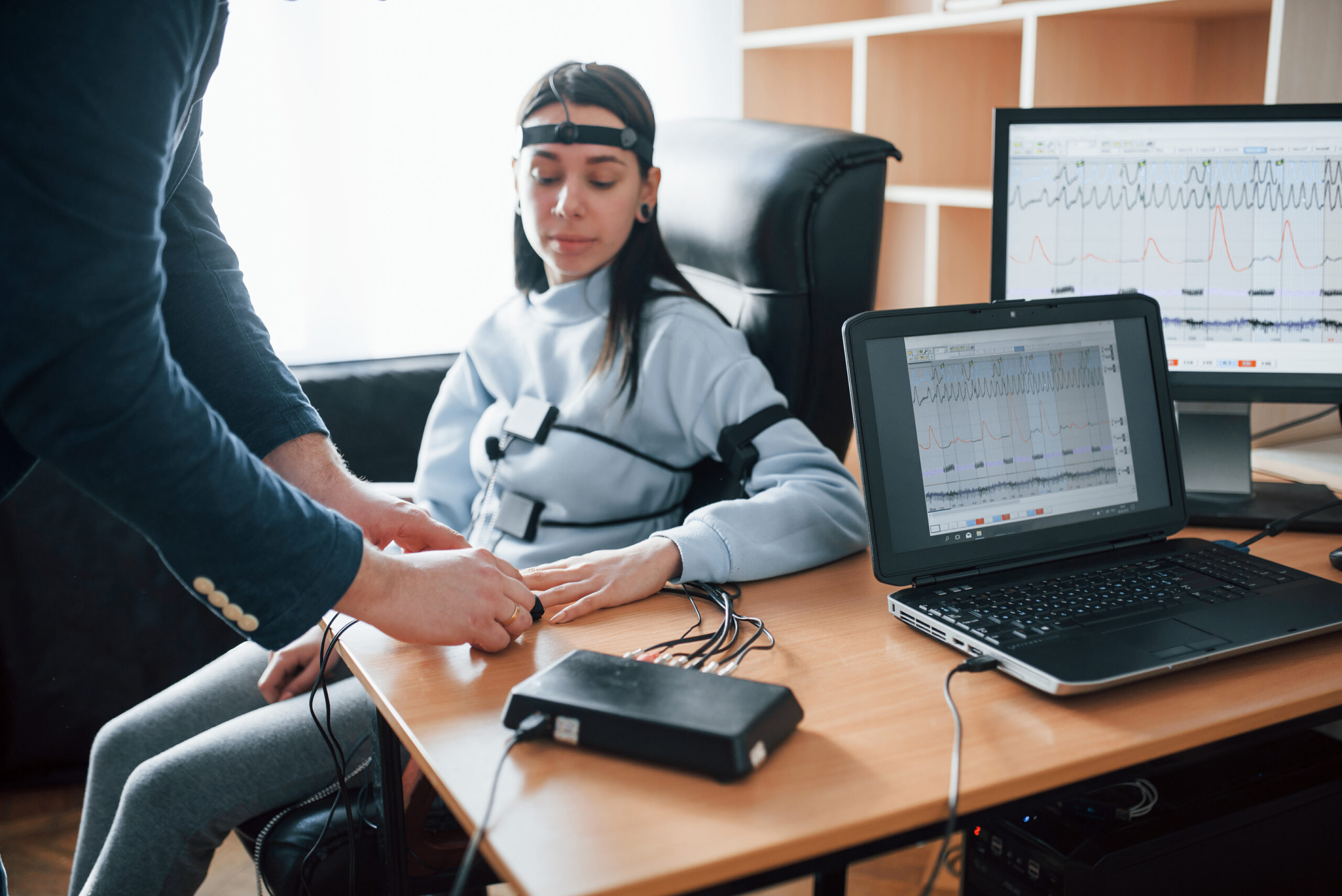
Image by Freepik

What is HRV biofeedback?

HRV stands for heart rate variability, which refers to the natural variation in timing between heartbeats. That variability is closely tied to the autonomic nervous system and can provide useful information about how flexibly the body is responding to stress, recovery demands, and internal regulation. HRV biofeedback uses that information as part of an interactive training process, helping patients learn how to influence their physiology through breathing and awareness-based techniques.

In practical terms, HRV biofeedback is often used when a person feels stuck in a more activated, reactive, or poorly regulated state. This can show up as chronic tension, poor stress tolerance, sleep disruption, headaches, digestive symptoms, panic-type physiology, or a general sense that the body does not calm down easily once it gets revved up. Rather than simply telling someone to “breathe” or “relax,” HRV biofeedback gives objective feedback and coaching so the patient can see whether the body is actually shifting.

How HRV biofeedback works

During HRV biofeedback, a sensor is used to track heart rhythm data while the patient practices guided breathing and other regulation strategies. The goal is not simply slow breathing for its own sake, but learning how to breathe in a way that improves autonomic balance and produces a more coherent physiological response. The screen or feedback system lets the patient see whether the body is actually responding, turning an abstract idea into something concrete and trainable.

Measures physiology in real time

The training process uses real-time heart rhythm feedback so patients can see how their nervous system is responding as they practice.

Builds a more regulated breathing pattern

Guided breathing helps train a pattern that supports better autonomic balance rather than reinforcing shallow or stress-driven breathing habits.

Improves stress-response flexibility

The broader goal is to help the body shift more effectively between activation and recovery instead of getting stuck in chronic overactivation.

Turns clinic skills into daily-life tools

Because this is a learned skill rather than a passive procedure, the benefits are often strongest when patients apply the training outside the office as well.

HRV biofeedback is often especially useful for patients who understand that stress affects their symptoms but have never been shown how to regulate their physiology in a measurable, repeatable way.

What to expect during your visit

Your visit begins with a discussion of your symptoms, your stress-response pattern, and whether HRV biofeedback makes sense as part of your broader care plan. During the session, a sensor is used to monitor your heart rhythm while you work through guided breathing or other self-regulation exercises. You are not just sitting passively through a treatment. Instead, you are actively learning how to influence your body’s response and seeing in real time whether the strategy is working.

1. Assessment

We review whether stress physiology, autonomic dysregulation, or poor recovery appears to be contributing to the symptom pattern.

2. Training session

You work through guided breathing and regulation strategies while real-time feedback shows how your heart rhythm and nervous system are responding.

3. Skill integration

The long-term value comes from practicing and applying these skills outside the clinic in the situations that usually trigger symptoms.

HRV biofeedback is often more effective when it is treated as a training process rather than a one-time intervention. Repetition and follow-through matter.

What HRV biofeedback may support

HRV biofeedback is often used in patients with stress-related conditions or symptom patterns that appear strongly influenced by autonomic imbalance. This does not mean every problem is psychological or that symptoms are “just stress.” Rather, it recognizes that the autonomic nervous system can shape how intensely a person experiences pain, sleep disruption, gut symptoms, headaches, tension, recovery problems, and general symptom reactivity.

For that reason, HRV biofeedback may be considered in a range of clinical settings, especially when the patient notices that symptoms flare with stress, poor sleep, overstimulation, emotional load, or feeling chronically activated. It can be a useful adjunct when the goal is to improve regulation, resilience, and physiologic self-control rather than relying only on passive therapies.

  • Stress-related conditions
  • Anxiety-related physiologic activation
  • Sleep disruption and poor restorative sleep
  • Headaches and tension-related symptom patterns
  • IBS or stress-responsive digestive symptoms
  • TMJ and chronic jaw tension
  • Palpitations or heightened body vigilance in selected patients after appropriate medical evaluation
  • General nervous system dysregulation or poor resilience
Good candidates often describe
  • Feeling keyed up, tense, or “stuck on” much of the time
  • Difficulty settling the body even when they want to relax
  • Symptoms that flare with emotional stress or overstimulation
  • A sense that breathing becomes shallow or dysregulated under load
  • Wanting a practical skill they can use between visits

Benefits and considerations

Potential benefits

  • Teaches a practical self-regulation skill rather than relying only on passive treatment
  • May improve stress tolerance, recovery, and autonomic flexibility
  • Can support broader care for stress-related conditions
  • Provides objective feedback during training instead of guesswork
  • May complement medical care, counseling, sleep support, or other nervous system-focused treatment

Important considerations

  • Best viewed as a training process, not a one-time fix
  • Progress depends in part on practice and consistency
  • Not every symptom pattern is primarily driven by autonomic dysregulation
  • It should not replace appropriate medical evaluation when another diagnosis needs direct treatment
  • Some patients need coaching and repetition before the skill becomes natural

The strongest role for HRV biofeedback is often in patients whose physiology clearly shows a poor ability to downshift, recover, or regulate under stress and who are willing to actively practice the skill.

Aftercare and next steps

HRV biofeedback is typically most effective when it is integrated into a broader care plan rather than treated as a stand-alone intervention. Depending on the situation, that plan may also include medical treatment, sleep work, counseling, manual medicine, gut-focused care, headache treatment, or other stress-regulation strategies. The long-term goal is not simply to have a good session in the office, but to help the patient build a more reliable ability to regulate their physiology in real life.

After a session

You may be given breathing targets, self-practice strategies, or specific times to use the skill when stress or symptoms usually begin to rise.

Longer-term planning

The value of HRV biofeedback usually grows as the patient becomes better at applying the skill during work stress, sleep disruption, pain flares, gut symptoms, or other everyday challenges.

Schedule an HRV biofeedback consultation

If you are dealing with stress-related conditions, poor nervous system regulation, chronic tension, sleep disruption, headaches, IBS, TMJ, or a body that has trouble calming down once stress rises, HRV biofeedback may be worth considering. We can help determine whether it fits your situation and how it should be integrated into your broader care plan.