
Joint Aspiration | Bakker Natural Medicine
Advanced Pain & Injury Treatments

Joint Aspiration

Joint aspiration is a procedure used to remove excess fluid from a swollen joint. It may be performed to help relieve pressure and discomfort, and in some cases to help clarify what is causing the swelling. At Bakker Natural Medicine, ultrasound guidance may be used to improve accuracy and procedural precision when appropriate.

  • Pressure relief: Removing fluid may help reduce pain, stiffness, and joint pressure.
  • Diagnostic value: In some cases, aspirated fluid can help clarify the cause of swelling.
  • Greater precision: Ultrasound guidance can improve accuracy when targeting the joint space.
Trigger point therapy treatment on shoulder

What is joint aspiration?

Joint aspiration, sometimes called arthrocentesis, is a procedure in which fluid is withdrawn from a joint using a needle. It is most often considered when a joint is swollen, visibly enlarged, painful, warm, or difficult to move because of excess fluid.

In some situations, the primary goal is symptom relief by reducing pressure inside the joint. In others, aspiration can also provide useful diagnostic information, especially when there is concern about crystal disease, inflammation, bleeding into the joint, or another underlying cause of the effusion.

Why joint aspiration is done

A swollen joint is not a diagnosis by itself. Fluid can build up for different reasons, including injury, irritation, inflammatory processes, crystal disease such as gout, degenerative joint problems, or other causes. Joint aspiration may be used either to relieve symptoms, gather more information, or both.

Relieve swelling and pressure

Removing excess fluid may help reduce fullness, pain, and stiffness, particularly in a large swollen joint.

Improve movement

When fluid is limiting normal joint motion, aspiration may help restore more comfortable range of motion.

Support diagnosis

In some cases, aspirated fluid may be sent for analysis to help clarify why the joint is swollen.

Guide next steps

The findings may help determine whether the problem is more consistent with injury, inflammation, crystal disease, or another process.

Why ultrasound guidance matters

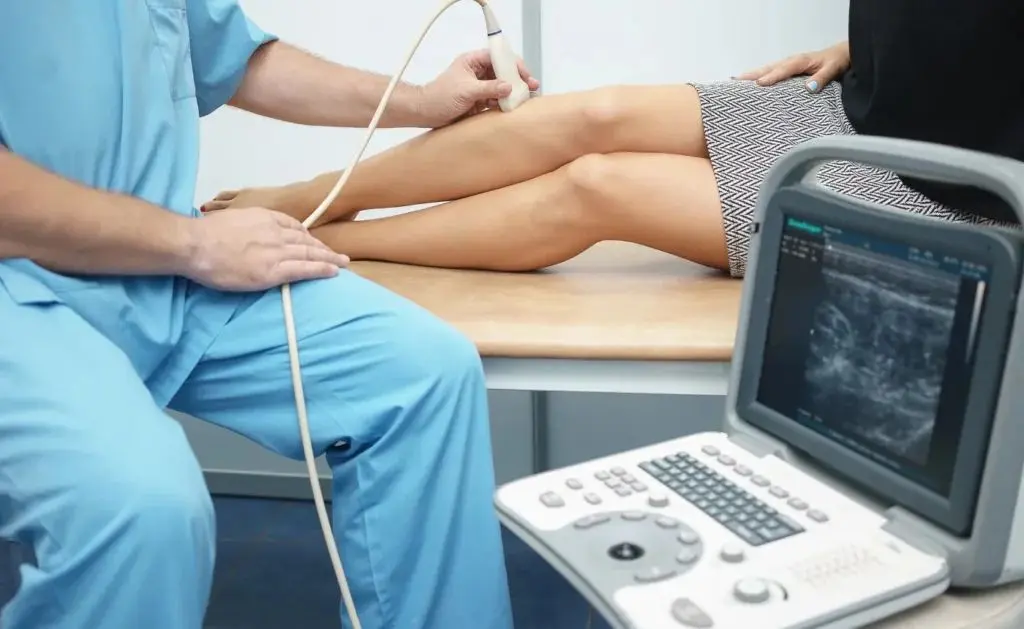
Ultrasound allows us to visualize the joint space and surrounding structures in real time. That can improve procedural accuracy, especially when the effusion is smaller, the anatomy is less obvious from the surface, or a more precise needle path is preferred. Rather than relying only on landmarks, ultrasound helps guide the procedure more directly.

More accurate targeting

Ultrasound can help confirm where the fluid is and guide the needle into the intended space more precisely.

Real-time visualization

The joint and nearby structures can be seen during the procedure rather than estimated from surface anatomy alone.

Helpful in complex anatomy

Guidance can be especially useful when the joint is difficult to access or swelling is not straightforward.

Thoughtful procedural planning

Ultrasound can help us choose the safest and most effective approach based on the specific joint and fluid pattern.

What to expect during your visit

Your visit begins with an assessment of the joint, your symptoms, how long the swelling has been present, and whether there is concern for injury, inflammation, or another cause. If aspiration is appropriate, the procedure is reviewed with you and the joint is prepared in a clean manner. When ultrasound guidance is used, the fluid and surrounding anatomy are visualized before the aspiration is performed.

1. Evaluation

We assess the swollen joint and determine whether aspiration is appropriate and what information or relief it may provide.

2. Procedure

The joint is cleaned, the aspiration is performed, and excess fluid is withdrawn when appropriate.

3. Next steps

You receive guidance on activity, monitoring, and whether additional testing, treatment, or follow-up is needed.

Some soreness at the procedure site can occur afterward, but many patients primarily notice relief of joint pressure when a significant effusion is present.

When joint aspiration may be considered

Joint aspiration may be considered when a joint is visibly swollen, feels tight or pressurized, is difficult to move because of fluid, or when the cause of the swelling needs further clarification. It is not something every swollen joint requires, but in the right setting it can be both useful and informative.

  • Large knee effusions
  • Joint swelling after injury
  • Unexplained recurrent joint fluid
  • Concern for inflammatory or crystal-related processes
  • Pressure and stiffness from a distended joint
  • Situations where fluid analysis may help guide diagnosis
Patients often describe
  • A joint that feels full, tight, or hard to bend
  • Visible swelling around the joint
  • Pain that worsens with flexion or weight-bearing
  • Warmth, pressure, or a sense that fluid is present
  • Swelling that returned after an injury or flare

Benefits and risks

Potential benefits

  • Relief of joint pressure and fullness
  • Improved comfort and range of motion
  • Helpful diagnostic information in selected cases
  • Greater procedural accuracy when ultrasound guidance is used

Possible side effects and risks

  • Temporary soreness or bruising at the site
  • Bleeding or irritation in the treated area
  • Re-accumulation of fluid depending on the cause
  • As with other needle procedures, there are procedural risks that are reviewed before treatment

If a joint is red, severely painful, associated with fever, or there is concern for infection, urgent evaluation may be more appropriate rather than routine outpatient treatment.

Schedule a joint aspiration consultation

If you have a swollen joint that feels full, painful, or difficult to move, joint aspiration may be worth considering. We can help determine whether removing fluid, further evaluation, or another treatment path makes the most sense for your situation.