
Prolotherapy | Bakker Natural Medicine
Advanced Pain & Injury Treatments

Prolotherapy

Prolotherapy is an injection-based treatment used to support injured or chronically irritated ligaments, tendons, and joints. At Bakker Natural Medicine, we use ultrasound guidance to improve the precision of treatment, allowing injections to be placed more accurately at the structure being targeted.

  • Precision matters: Ultrasound guidance helps us visualize the target tissue and place the injection more accurately.
  • Structural focus: Often used when pain appears to be coming from ligaments, tendons, or joint-related instability.
  • Thoughtful care: Treatment is paired with diagnosis, movement guidance, and a broader recovery plan.
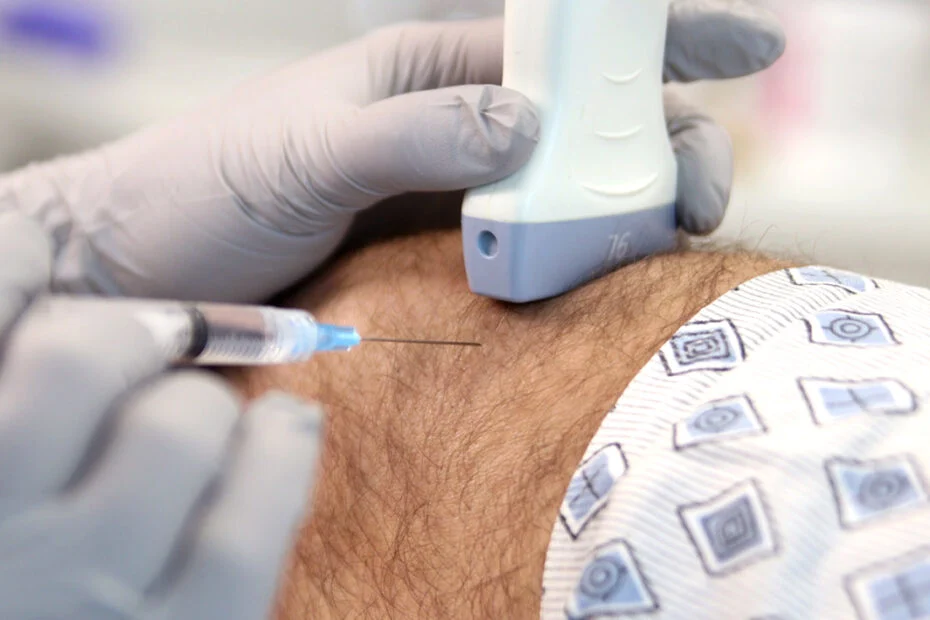
Trigger point therapy treatment on shoulder

What is prolotherapy?

Prolotherapy is an injection treatment commonly used when pain appears to be coming from chronically strained, irritated, or under-supported connective tissue. It is often considered in cases involving ligaments, tendons, entheses, and some joint-related pain patterns, particularly when symptoms have not fully improved with rest, exercise, or more conservative therapies alone.

In many cases, prolotherapy is used as part of a broader strategy to improve function, reduce pain, and support recovery in tissues that may not be healing optimally. Treatment is selected based on the structure involved, the chronicity of symptoms, and the overall clinical picture.

Why ultrasound guidance matters

One of the key differences in our approach is that we use ultrasound to guide prolotherapy injections when appropriate. Ultrasound allows us to visualize soft tissues in real time, including tendons, ligaments, joint spaces, and nearby structures. That improves our ability to target the intended tissue more accurately rather than relying on surface anatomy alone.

Improved accuracy

Ultrasound helps us place the injection more precisely at the structure being treated.

Better tissue visualization

It allows us to see relevant anatomy in real time, including tendons, ligaments, and nearby vessels.

Procedure confidence

Guidance can be especially helpful in smaller joints, deeper structures, or areas with more complex anatomy.

More thoughtful planning

Ultrasound findings can help refine the treatment plan and support a more individualized injection approach.

Not every injection done everywhere is ultrasound-guided. We consider this an important part of delivering more precise care.

What to expect during your visit

Your visit begins with an evaluation of your symptoms, injury history, prior imaging if available, and a focused exam. If prolotherapy appears appropriate, we review the treatment area, discuss what the procedure involves, and explain what kind of post-injection soreness or activity modification may be expected. When ultrasound guidance is used, the anatomy is assessed and the target area is visualized before the injection is performed.

1. Evaluation

We determine whether the pain pattern suggests a ligament, tendon, or joint-related source that may respond to injection treatment.

2. Ultrasound-guided procedure

The target structure is visualized and the injection is placed with greater precision when guidance is used.

3. Recovery plan

You leave with instructions regarding activity, soreness expectations, and follow-up planning.

Mild to moderate soreness after prolotherapy is common for a period of time after treatment. That reaction is often expected.

What prolotherapy may help with

Prolotherapy may be considered for chronic musculoskeletal complaints when connective tissue injury, repetitive strain, tendon irritation, or joint-related instability appears to be contributing to symptoms. A full assessment is important, because not every pain problem is a good fit for injection-based care.

  • Chronic ligament sprain patterns
  • Tendon and enthesis-related pain
  • Certain forms of joint pain or instability
  • Persistent pain after incomplete recovery from injury
  • Recurrent overuse-related musculoskeletal complaints
  • Selected spine, pelvic, shoulder, elbow, hip, knee, ankle, or foot pain patterns
Good candidates often describe
  • Pain that keeps returning with activity
  • Symptoms after an old sprain or strain
  • Localized tenderness at tendon or ligament attachments
  • Persistent pain despite rest, therapy, or basic rehab
  • A sense of weakness, instability, or incomplete healing

Benefits and risks

Potential benefits

  • More targeted treatment of connective tissue pain generators
  • May support improvement in pain and function over time
  • Useful when paired with rehabilitation and movement-based care
  • Ultrasound guidance can improve procedural accuracy

Possible side effects

  • Temporary soreness or flare after injection
  • Bruising or localized swelling
  • Temporary stiffness or discomfort with activity
  • As with other injection procedures, there are procedure-related risks that are reviewed before treatment

Injection procedures are not appropriate for every condition. A proper evaluation helps determine whether prolotherapy, another procedure, rehabilitation, or a different treatment path makes the most sense.

Recovery and next steps

Prolotherapy is typically part of a broader treatment plan rather than a stand-alone fix. Depending on the tissue being treated, your plan may include a period of modified activity, progressive exercise, follow-up injections, hands-on care, or other supportive therapies. The goal is not only to calm pain, but to help the affected area tolerate load and function better over time.

After treatment

You may receive guidance on rest, relative activity modification, heat or ice use, and when to resume exercise.

Longer-term planning

The best outcomes often come from combining precise procedures with a thoughtful rehab and movement strategy.

Schedule a prolotherapy consultation

If you are dealing with lingering pain after injury, recurrent strain, or a problem that seems tied to tendons, ligaments, or joint support structures, prolotherapy may be worth considering. We can help determine whether ultrasound-guided injection treatment is an appropriate fit for your condition.